About
Built by people who live on the water.
Pelagic Frontier is a small, deliberately focused sardine run operation on the Wild Coast — run by two career mariners who decided the run deserved to be done properly for the people who come to shoot it.
Dylan Hansen
Dylan grew up around boats — his father owned a boat dealership, and he spent his youth, and still spends his time, fishing, scuba diving and spearfishing along the South African coast. He has since built a career at sea, working on superyachts internationally, and holds a Yachtmaster 200-ton licence and a SAMSA skipper's licence.
Luigi Corna
Luigi grew up on the water too, and worked as a commercial fisherman in the Western Cape before moving into the superyacht industry. He holds a Master 500 licence and a SAMSA skipper's licence — and the kind of hard-earned sea sense that only comes from working the ocean for a living.
Together they've spent years running and skippering vessels in demanding conditions. For 2026, they're stepping off the yachts to run Pelagic Frontier full-time — bringing superyacht-level standards of seamanship and service to the Wild Coast.
The first time you witness the sardine run, it reorders your sense of what the ocean is capable of. That's where Pelagic Frontier began — and the more we looked at how the run was being run for divers and photographers, the more we saw the same problem: boats packed with mixed-ability groups, where the people who came to shoot end up waiting on everyone else, and nobody gets positioned properly on the action.
So we built the opposite. Small, fixed groups of six. No swapping divers in and out mid-trip. A boat and a crew whose entire job that week is getting your group into the right water at the right moment — and then getting out of your way so you can shoot.
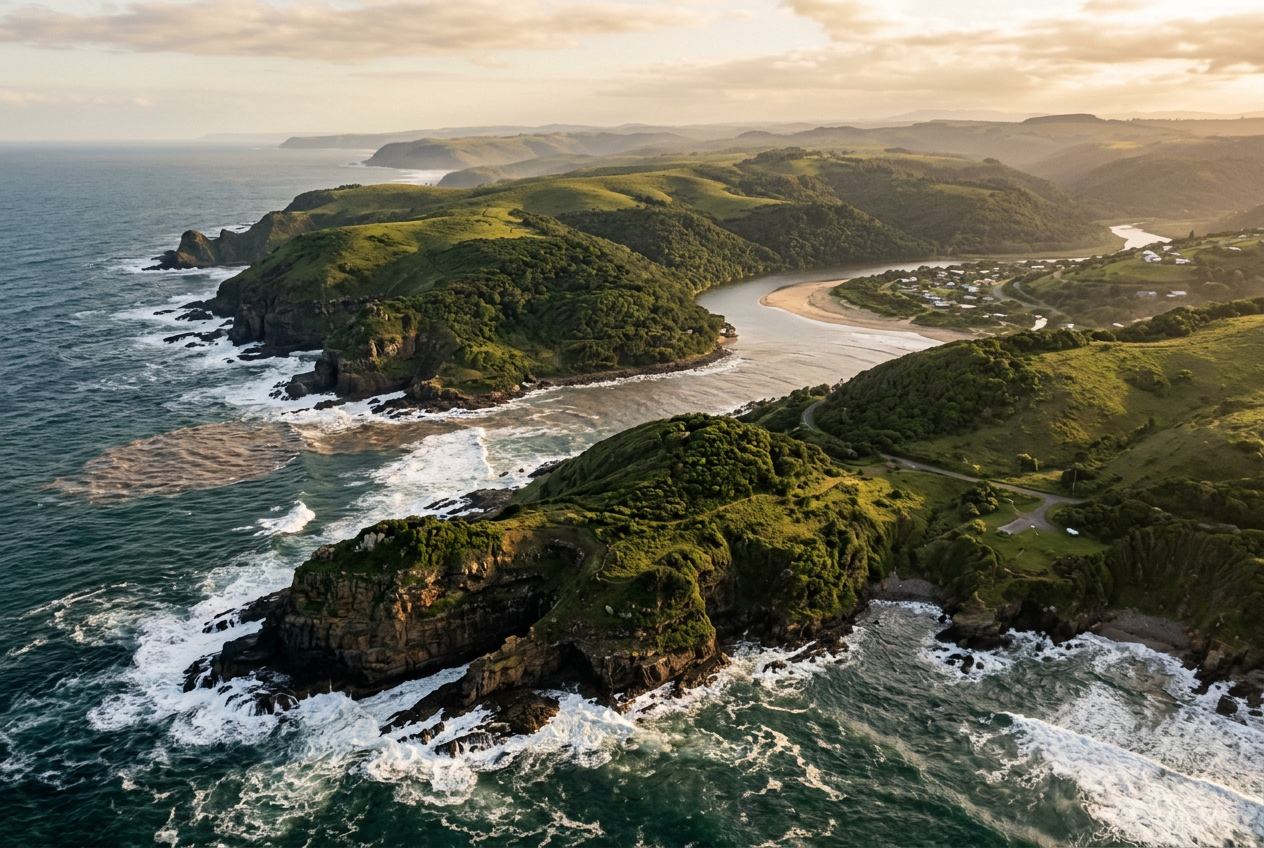
We didn't pick Port St Johns for convenience — we picked it because the action is better here. PSJ sits inside the early migration corridor, where the shoals are denser and the baitball activity more reliable than the KZN South Coast spots further north like Umkomaas, which catch the run later and more inconsistently. It's also far less crowded — fewer boats on the same baitball means cleaner water, better positioning and better images. We've written an honest comparison: Port St Johns vs Umkomaas.
Neither of us claims to be a professional underwater photographer — what we are is operators who've designed every part of the trip around the people who are. Six guests per boat, not twelve. Fixed groups so the whole week's rhythm is built around your shooting, not interrupted by handovers. A skipper reading the water to put you on the baitball from the right angle and light. The difference between a trip that allows photography and one engineered for it.
We run a surf-launch-capable semi-rigid (RIB) suited to the Wild Coast's beach launches and the fast, mobile chasing the run demands. On every trip:
- A maximum of six guests — always
- Onboard emergency oxygen
- Radio communications for coordination and safety
- Skippers holding commercial-grade licences (Yachtmaster 200-ton / Master 500, both SAMSA-certified)
Dive accident cover: All guests must hold their own valid dive accident cover (DAN Southern Africa or equivalent) for the duration of their expedition. It's quick and inexpensive to arrange — we'll point you in the right direction once you book. See the FAQ for details.
We'll be straight with you: 2026 is Pelagic Frontier's inaugural season. We think that's a feature, not a caveat. This operation has been designed from the ground up, this year, specifically for photographers and serious ocean people — not bolted onto a generic dive business. You get founders who are personally on the water with you, a deliberately small operation that lives or dies on every guest's experience, and decades of combined commercial sea time behind the wheel.