A Field Guide
The Sardine Run.
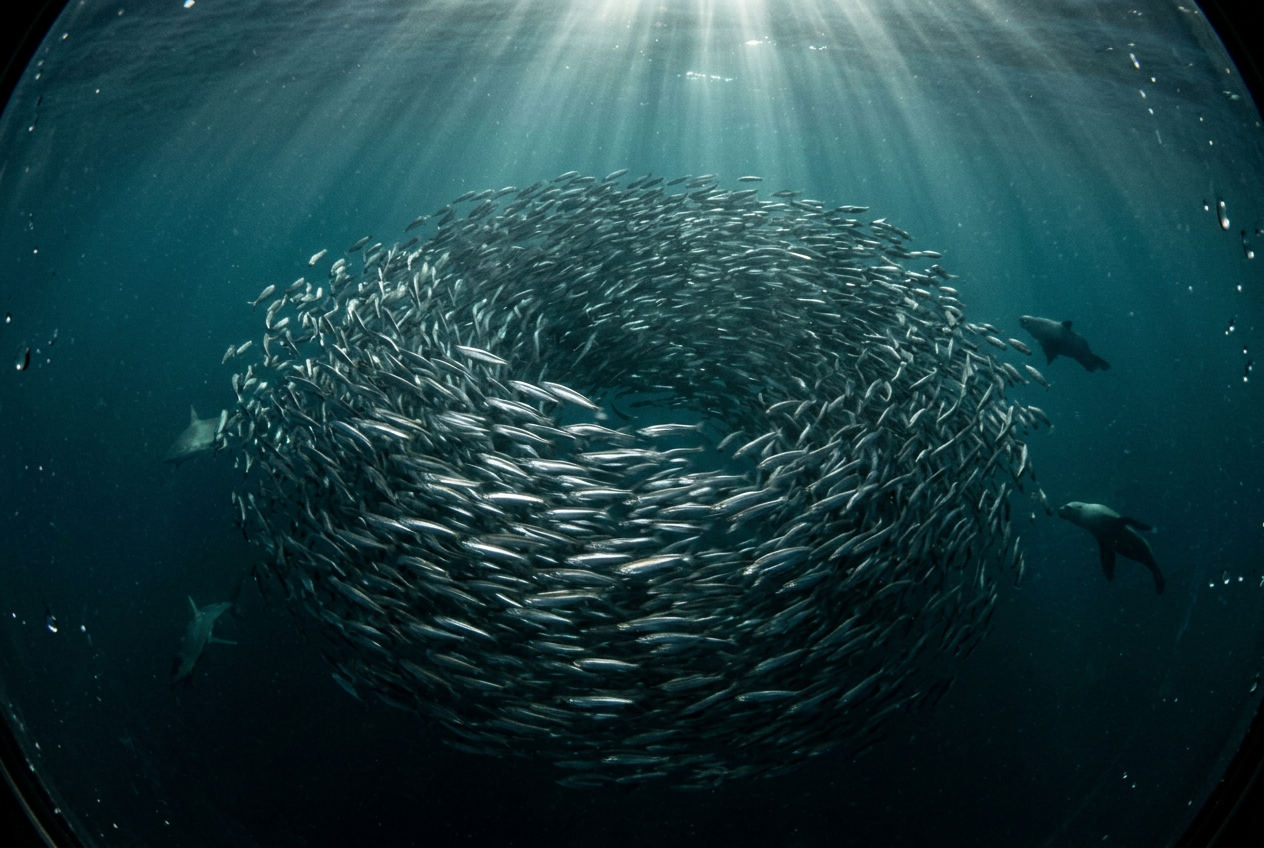
Each austral winter, a cold counter-current pushes north along South Africa's Wild Coast — and with it, billions of Sardinops sagax. What follows is the densest predator concentration on Earth.
Triggered by water temperatures dropping below 21°C, vast shoals of sardines move from the cooler Agulhas Bank northward into the warmer Indian Ocean. Some shoals stretch 7 km long, 1.5 km wide and 30 m deep — visible from satellites.
They draw an extraordinary cast of predators. Common dolphins arrive in super-pods of 5,000 strong, working in coordinated relays to corral sardines into tight, panicked spheres known as baitballs.
Bronze whaler, dusky and blacktip sharks circle the perimeter. Cape gannets fold their wings at 100 km/h and pierce the surface in white explosions. Bryde's whales lunge through from below. Occasionally, a humpback breaches into the chaos.
Annual Timeline
When the ocean comes alive.
01
May
First sightings
Cooler currents arrive. Early shoals form near East London.
02
June
Peak activity
Migration in full force along KZN South Coast. Daily baitballs.
03
July
Climax
Greatest concentration of dolphins, sharks and gannets.
04
August
Dispersal
Shoals scatter into the Indian Ocean. Season closes.
The Cast
A roll-call of apex predators.
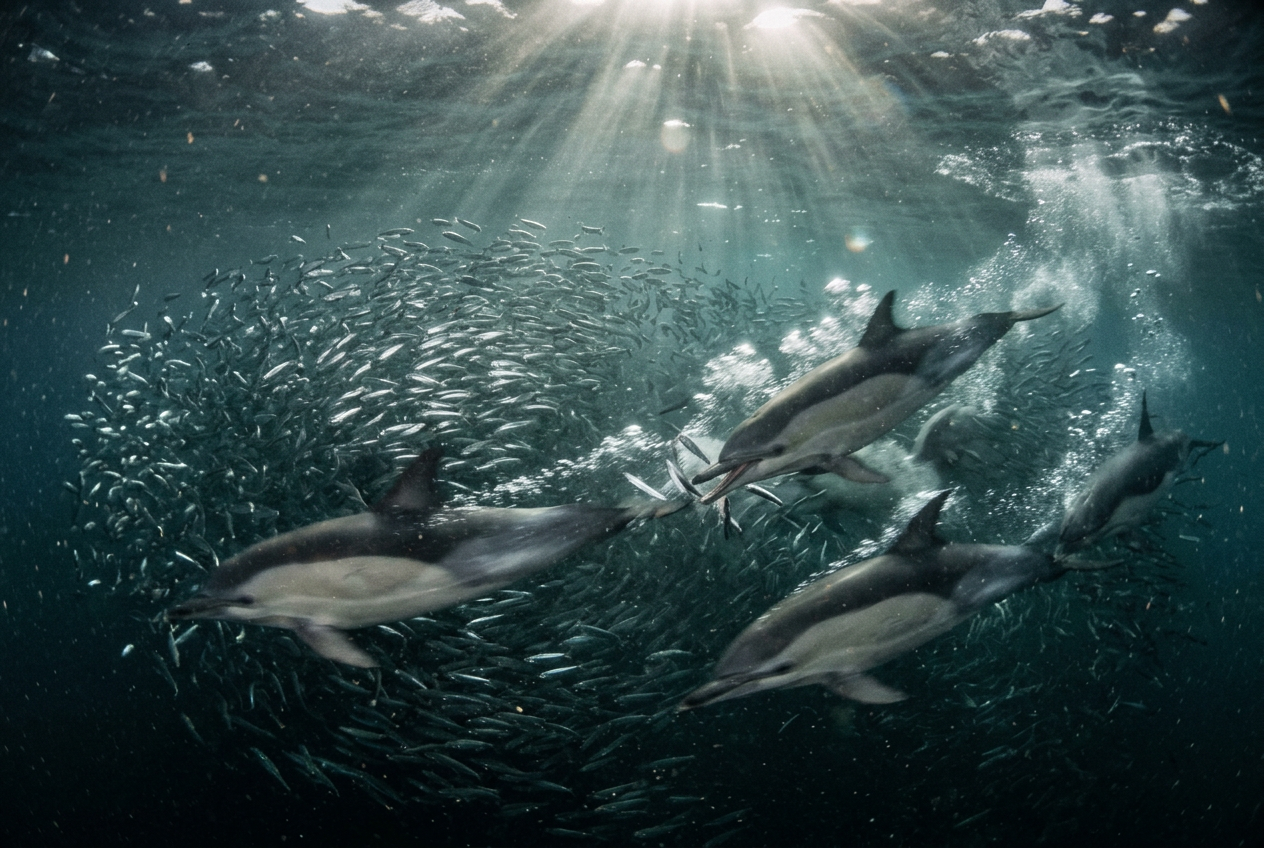
Common Dolphins
The architects. Super-pods orchestrate the entire baitball.
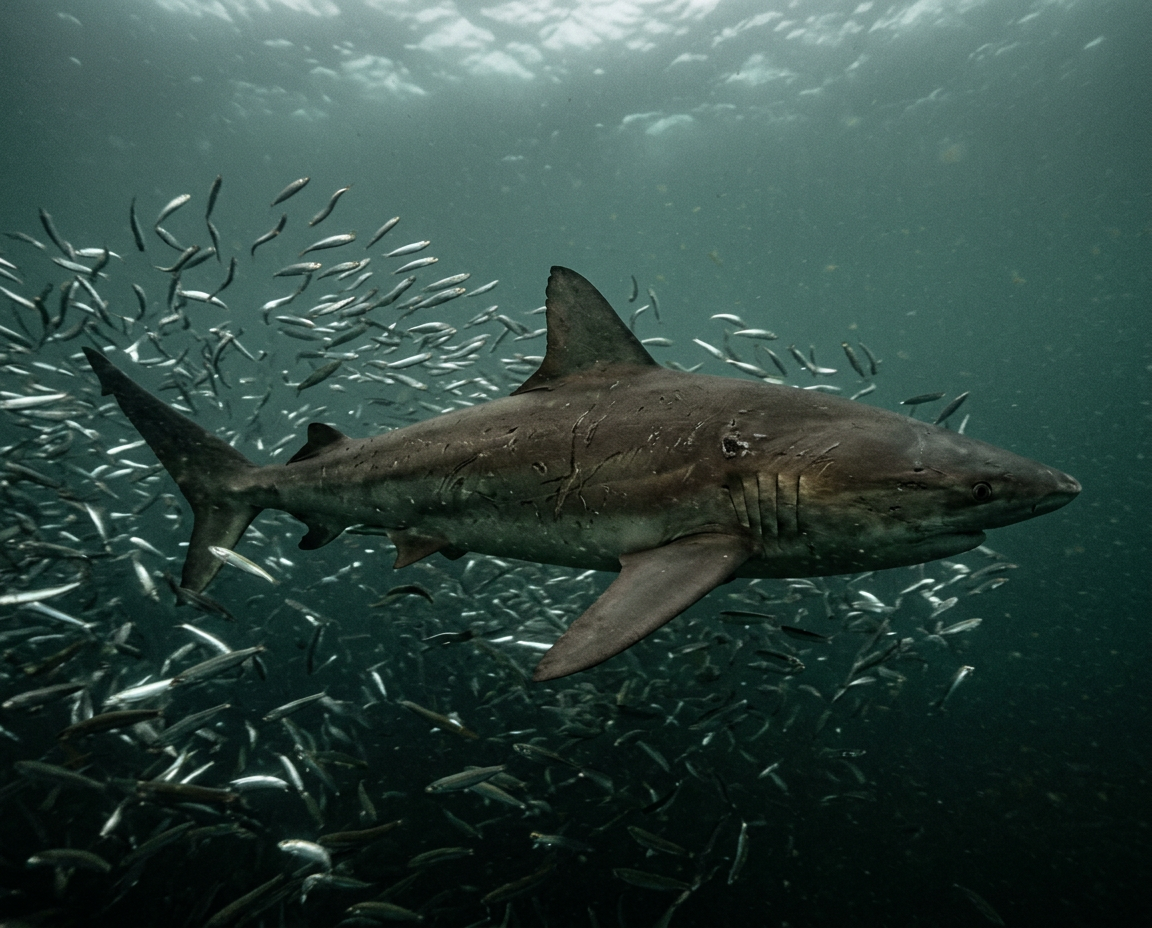
Bronze Whalers
Patrol the edges. Often the largest sharks in the encounter.
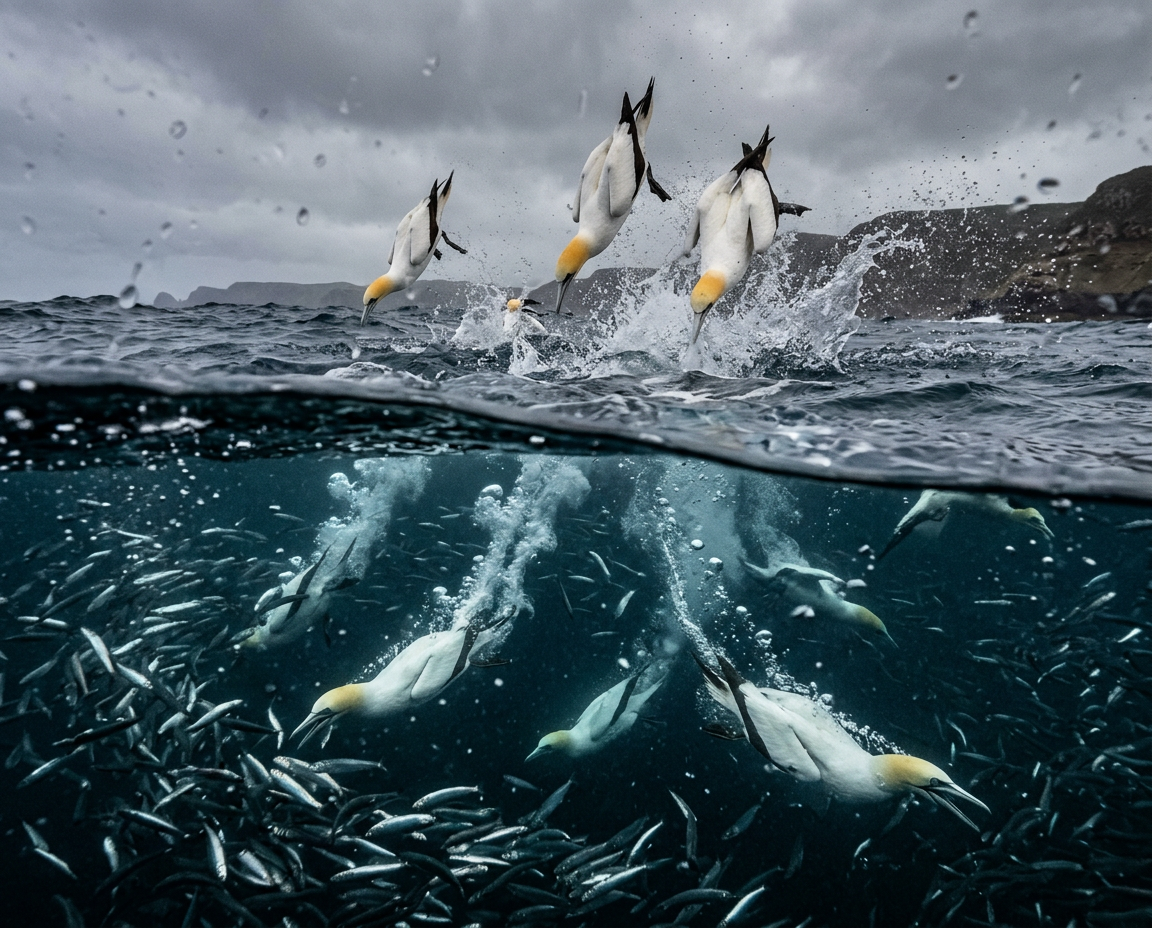
Cape Gannets
Aerial precision. Fold and dive at 100 km/h into the shoal.
01
Early June (1–15 June)
Sardines may still be south of Port Elizabeth. Cold water, plenty of marine life, but bait ball action is inconsistent. Suited to risk-tolerant travellers.
02
Mid–late June (15–30 June)
The run is typically engaging with the Wild Coast. First bait balls of the season are normally reported here.
03
Early–mid July (1–15 July)
Peak. Most reliable bait ball activity, most photographic output.
04
Late July (15–30 July)
Diminishing returns. Sardines beginning to disperse north of Durban. Whale watching remains exceptional.
The Wild Coast delivers. Umkomaas stages.
Between Port St Johns, Coffee Bay and Mbotyi, the continental shelf comes closer to land than anywhere else along South Africa's eastern seaboard. This funnels the cold counter-current and the sardines closer inshore, creating the highest density of predator activity. The majority of well-documented bait ball encounters happen in this 80km stretch.
Umkomaas, 250 km north on the KwaZulu-Natal South Coast, is logistically convenient and home to Aliwal Shoal — an outstanding year-round reef dive. But it is not where the most concentrated bait ball action occurs. Operators based there make a 4–5 hour road transfer to Port St Johns to access the real run.
What It's Really Like
Honest conditions, not brochure conditions.
Boat days are long.
Plan for 06:30 launch through to 14:00–16:00 return. Open ribs, no shelter, occasionally rough swell.
Water is cool to cold.
14–22°C across the season. A 5mm wetsuit with hood is the comfortable minimum; cold-sensitive divers run 7mm or semi-dry. Booties and gloves recommended.
Visibility is variable.
Anywhere from 5m to 30m. Best within and immediately after a bait ball.
Entries are aggressive.
Negative entries off a moving rib are standard.
Currents are real.
Drift dives are the norm. Prior drift experience is essential.
Weather cancellations happen.
Plan for 1–2 lost days in a 6-day trip.
Gear that earns its place in the dry bag.
Cameras & housings
High-ISO-capable mirrorless or DSLR bodies in pro housings (Nauticam, Ikelite, Sea & Sea, Marelux). Working setups in recent seasons:
- Stills — Sony A1, A7R V, A7S III; Canon R5 / R5 II; Nikon Z8 / Z9. Burst rate matters more than megapixels.
- Hybrid / Video — Sony A7S III, FX3; Canon R5 C; Panasonic GH7. Internal 4K 60p+ is the working standard.
Lenses
- Fisheye (8–15mm full-frame equivalent) — the workhorse. Lets you fill the frame with the bait ball at 30–50cm range.
- Rectilinear wide (16–35mm) — for scene-setting, gannet dives from below, predator silhouettes.
Strobes & lighting
Optional and often counter-productive. Most documentary-grade bait ball footage shot in the last five years is ambient. If you bring them, run low power as fill — never as primary.
Technique
Freediving outperforms scuba for bait ball work. No bubbles, no noise, faster repositioning, much closer approach. Almost every iconic sardine run image you've seen was shot on a single breath.
How to Choose
Five variables that actually matter.
- 01
Operational base.
A Port St Johns–based or PSJ-deploying operator gets you to the bait balls faster than one staging from Umkomaas.
- 02
Group size.
Six to eight guests per boat is the practical ceiling for photographer-focused trips.
- 03
Aerial spotting.
Microlight aerial spotters dramatically increase encounter rate by locating bait balls before surface signs are visible.
- 04
Guide background.
A guide who is themselves a working underwater photographer or filmmaker will position the boat — and brief you — differently than a generalist divemaster.
- 05
Honesty.
If an operator promises bait balls or uses stock footage that obviously isn't theirs, walk away.
Things people ask us.
20 June to 15 July is the statistically optimal window. Booking 8-day trips that span the window gives you the highest chance of catching at least one peak day.
Field Guides
Go deeper on the run.
When is the best time to dive?
A month-by-month breakdown of the season and when it peaks.
Read guideSardine Run photography guide
Gear, settings and field craft for shooting the migration.
Read guideWhat you'll see underwater
Dolphins, sharks, whales and gannets — the cast of the run.
Read guideHow much does it cost?
An honest pricing breakdown for a quality Wild Coast trip.
Read guideHow to prepare
Certification, fitness, wetsuit and gear for your expedition.
Read guideReady to book? See our 2026 sardine run expeditions or read our sardine run FAQ.
See 2026 Expeditions